
We’ve Turned Moaning About Manchester United Into a Million-Pound Industry. So Why Is Grassroots Football Still Begging for Money?
Football media has learnt to turn passion into income. What can grassroots clubs take from it, and how can sponsors and creators help the volunteers who keep football going?
By Jack · · 12 min read
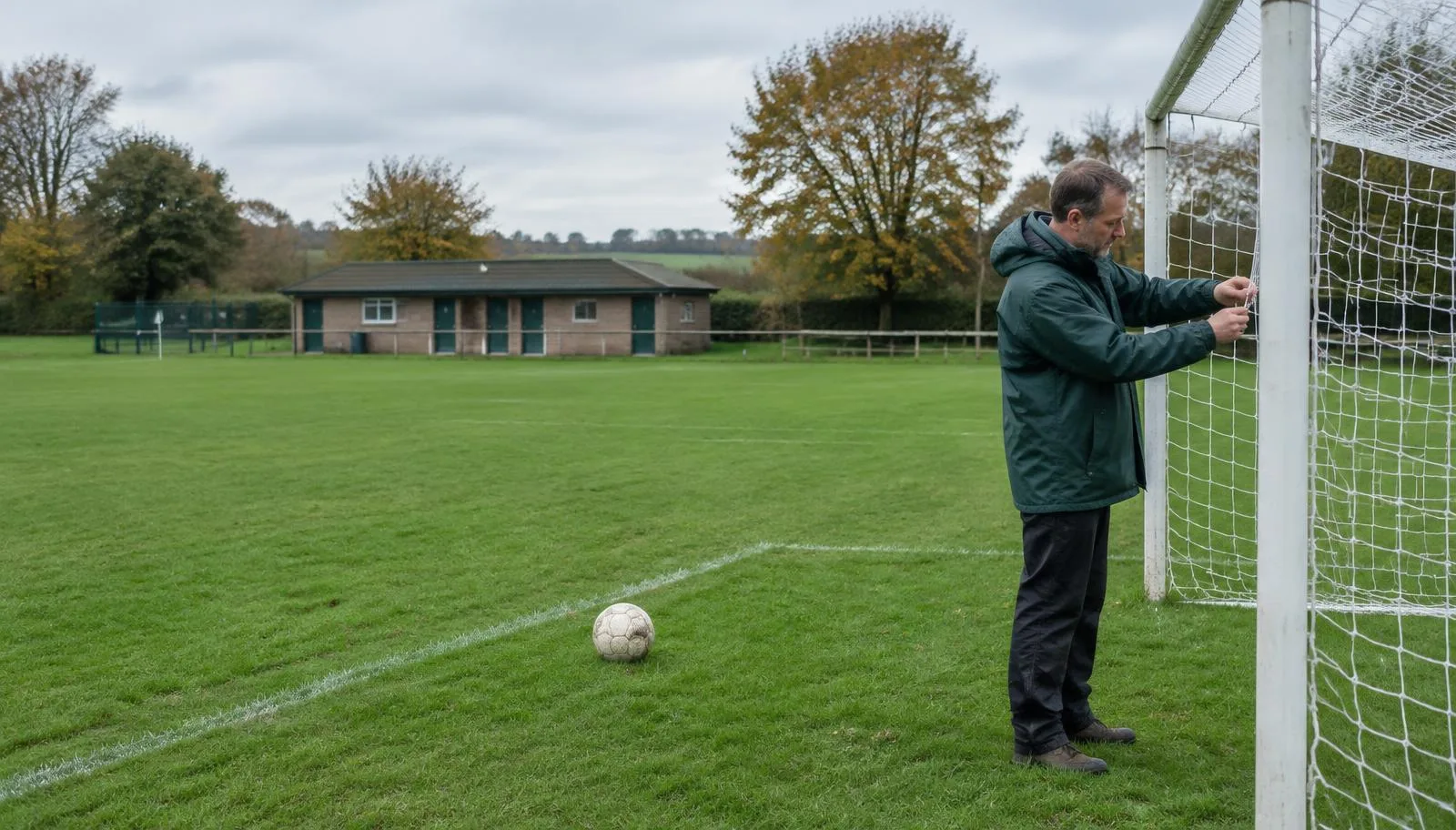
Opinion by Jack. Featured image: AI-generated illustration of an adult volunteer, not a photograph of a named club.
The Overlap’s acquisition of Mark Goldbridge’s football channels shows what a valuable business can be built around the game. For grassroots clubs still chasing subs and kit sponsors, it raises a useful question: what can we learn from it?
Imagine explaining this to somebody who knows absolutely nothing about football.
A bloke sits in front of a camera, watches Manchester United play badly, gets increasingly frustrated, and tells millions of people exactly what he thinks.
He does this often enough, builds a loyal following, and eventually creates a business that attracts a reported seven-figure acquisition.
Meanwhile, a volunteer football coach finishes a 10-hour shift, drives to a muddy pitch, puts the goals up, coaches 15 children, gets shouted at by a parent and spends his Sunday evening chasing unpaid £20 subscriptions.
One has built a valuable media business.
The other is wondering whether he’ll bother doing it again next season.
Welcome to modern football.
Fair play, Mark Goldbridge
On 14 April 2026, The Overlap, the football media business founded by Gary Neville, announced that it had acquired The United Stand and That’s Football, the two YouTube channels created by Mark Goldbridge.
The Guardian reported that the deal was understood to be worth a seven-figure sum. The exact price was not disclosed in the announcement.
The Overlap’s announcement put the channels’ combined subscriber total at 3.7 million at the time. That is a combined channel count, not a claim about 3.7 million different people.
Sources: The Overlap’s acquisition announcement, 14 April 2026, and The Guardian’s reporting on the deal.
That’s an extraordinary achievement.
And before anybody accuses me of having a go at Goldbridge, I’m doing quite the opposite.
He’s done something that thousands of football clubs, organisations and governing bodies have failed to do.
He’s worked out how to turn people’s passion for football into a commercially successful business.
He’s built an audience.
He’s created a recognisable brand.
He’s developed multiple revenue opportunities.
And, perhaps most importantly, he’s given people a reason to keep coming back.
Whether you love him, hate him or think he’s talking complete nonsense, you cannot deny the commercial success.
In fact, I’d argue that grassroots football could learn an enormous amount from him.
But the acquisition raises a much bigger question.
Why are we so good at making money from people talking about football, yet so bad at helping the people who actually provide it?
When football frustration becomes a business
There’s something almost comical about the football content economy.
Picture Manchester United losing 3-0.
Within minutes, the internet comes alive.
The manager needs sacking.
The players aren’t good enough.
The owners are clueless.
Somebody needs to apologise.
Somebody else needs to leave.
And everybody has an opinion.
The watchalongs generate views.
The reaction videos generate views.
The podcasts generate views.
The arguments generate even more views.
Then somebody clips the best bits, uploads them to another platform, and the whole cycle starts again.
A single disappointing performance can provide enough content to keep a small media company busy for days.
And here’s the clever part.
The worse things get, the more valuable the conversation can become.
Football frustration has become a commercial product.
Now compare that with the grassroots game.
A club successfully gets 100 children playing football every weekend.
Nobody makes a documentary.
A volunteer gives up 15 years of their life running a youth team.
Nobody offers them a sponsorship deal.
A chairman somehow keeps a club operating despite rising pitch fees, equipment costs and a shortage of volunteers.
Nobody’s lining up to acquire his operation for seven figures.
Of course, these aren’t directly comparable businesses.
But the contrast tells us something important about what football currently rewards.
Attention has become incredibly valuable.
Participation, despite its enormous social value, remains desperately underfunded.
Football’s money distribution deserves a harder look
I can already hear the objections.
“Football clubs aren’t businesses.”
“Grassroots football shouldn’t be about making money.”
“Volunteers do it because they love the game.”
And I understand those arguments.
But I think they’re part of the reason we’re in this mess.
We’ve somehow convinced ourselves that because grassroots football is built on passion, it shouldn’t need to think commercially.
That’s nonsense.
A club doesn’t become less community-focused because it generates a healthy surplus.
A coach doesn’t care less about children because they’re paid for their time.
A volunteer doesn’t become greedy because they want proper equipment, functioning facilities and a bit of support.
Financial sustainability isn’t the enemy of grassroots football. It’s what allows grassroots football to survive.
The professional game has spent decades building increasingly sophisticated ways to generate revenue.
Broadcasting rights.
Sponsorship.
Merchandise.
Hospitality.
Media subscriptions.
Digital content.
Commercial partnerships.
Meanwhile, thousands of grassroots clubs are still relying on the same fundraising methods they were using 30 years ago.
Raffles.
Race nights.
Bag packing.
Begging local businesses to put £250 towards a kit.
There’s nothing wrong with any of those activities.
But should they really be the foundation of a modern football club’s financial strategy?
I don’t think so.
Grassroots football sponsorship needs a plan
Here’s where I might upset a few people.
We cannot keep blaming the Premier League, the FA, local councils and wealthy investors for every financial problem in grassroots football.
They absolutely have responsibilities.
And there’s a strong argument for greater investment further down the pyramid.
But grassroots clubs also need to take responsibility for becoming better businesses.
Not every club, of course. Some are already doing exceptional work.
But I’ve seen far too many clubs treating sponsorship as something they do when they’re desperate.
The kit needs replacing.
The pitch fees have gone up.
The clubhouse roof is leaking.
Suddenly, somebody remembers they need a sponsor.
So they put a post on Facebook.
“Does anybody know a local business willing to sponsor us?”
And then they wait.
That’s not a sponsorship strategy.
That’s hoping somebody feels generous.
Compare that with what successful football media businesses do.
They know their audience.
They understand what makes that audience valuable.
They create commercial packages.
They build relationships with advertisers.
They provide measurable exposure.
And they make it easy for businesses to spend money with them.
Why shouldn’t grassroots football clubs be doing exactly the same thing?
Take a hypothetical club with 200 players. It may also bring together parents, grandparents, friends and local supporters. The actual audience needs counting, not guessing.
That can be a genuine community audience. Count people once and keep attendance, online followers and household connections separate.
For a local business, that could be extremely valuable.
A plumber doesn’t necessarily need 100,000 Instagram followers.
They might need 20 more customers within five miles of their business.
A grassroots football club could help them reach those people.
But only if the club understands what it’s selling.
And only if it stops treating sponsorship as charity.
Four ways to build more sustainable grassroots funding
Rather than simply complaining about where football’s money goes, I’d like to see the industry build better ways of distributing commercial opportunity.
And I think there are four areas worth exploring.
1. Football media businesses could partner with grassroots clubs
Imagine if every major football content creator adopted five grassroots clubs.
Not by sending them £500 and taking a photograph for social media.
By helping them build something sustainable.
Introduce them to sponsors.
Promote their fundraising campaigns.
Help them tell their stories.
Use their commercial relationships to create opportunities.
A creator with a large audience might be able to achieve more for a grassroots club through one introduction than the club could achieve through six months of fundraising.
And it doesn’t necessarily cost the creator anything.
It costs them some time and a willingness to help.
I’d love to see The Overlap, The United Stand and other major football media businesses explore this properly.
Not because they owe grassroots football their profits.
But because they have the audience, expertise and commercial connections to make a genuine difference.
2. Brands could sponsor communities, not just audiences
Let’s say a national company spends £100,000 sponsoring football media content.
That’s their decision.
They want exposure, engagement and customers.
Fair enough.
But what if the sponsorship agreement included a grassroots football component?
What if £10,000 supported 20 community clubs?
What if the campaign followed those clubs throughout the season?
What if the sponsor could demonstrate how its investment had helped keep children playing football?
Suddenly, the brand isn’t simply buying advertising.
It’s becoming part of the football community.
And that creates stories worth telling.
The important thing is that this shouldn’t be treated as an additional charitable expense.
It should be part of the commercial proposition.
Because genuine community involvement can create value for brands too.
3. Clubs can build recurring sponsorship income
One-off sponsorships are useful.
But they’re also exhausting.
Every season, somebody has to start the same conversations again.
Find the sponsors.
Chase the payments.
Replace the businesses that disappear.
What if clubs offered annual or monthly partnership programmes instead?
As an illustration, imagine a local business agreeing to a sponsorship worth £50 per month for 12 months.
That’s £600 in agreed sponsorship value per year, before any applicable collection charges or tax.
Ten such agreements would total £6,000 a year.
Twenty would total £12,000. These are examples, not guaranteed income or a statement about any club’s receipts.
Now imagine what that could mean for a club struggling with pitch fees, equipment and administration.
Of course, those businesses need to receive genuine value in return.
That might include visibility, community events, introductions or other agreed benefits.
A recurring sponsorship programme can make income more predictable, provided sponsors renew and the club delivers the agreed benefits. Sponsorship is a commercial agreement; donations are a separate way to give.
The goal shouldn’t be to raise money once. It should be to build income that keeps coming back.
4. Volunteers need help with the business of running a club
This is probably the biggest issue of all.
We expect grassroots volunteers to do absolutely everything.
Coach.
Recruit.
Fundraise.
Manage finances.
Organise fixtures.
Handle safeguarding responsibilities.
Deal with parents.
Find sponsors.
Run social media.
And somehow have a normal life outside football.
It’s ridiculous.
We talk constantly about volunteer shortages.
But perhaps we should be talking more about the amount of work we’re asking volunteers to do.
If a club can generate an extra £10,000 a year, perhaps some of that money could go towards administration.
Perhaps it could pay somebody a few hours a week to manage sponsorship.
Perhaps it could reduce the workload of the chairman who’s been doing everything for the last decade.
That isn’t taking money away from football.
It’s investing in the people who keep it running.
And it might be the difference between a volunteer staying for another five years or walking away tomorrow.
What if we measured football’s success differently?
Imagine if, alongside viewing figures, subscriber numbers and commercial revenue, we started talking about something else.
How many grassroots clubs became financially sustainable this year?
How many volunteers received meaningful support?
How many teams avoided folding because they secured reliable funding?
How many businesses invested in their local football communities?
How many children gained access to football because their club could afford to reduce fees?
These are the numbers I’d love to see football celebrating.
Because the industry is very good at telling us how much money it makes.
I’d like to know more about how much of that success reaches the people at the bottom.
And I don’t think that’s an unreasonable question.
Why we’re building Grow the Game
Our ambition is simple.
Help 10,000 grassroots football clubs become financially sustainable.
That’s the mission behind Grow the Game.
We’re working towards a future where clubs have the knowledge, commercial opportunities and practical tools to generate reliable income.
Where local businesses can support football clubs through meaningful partnerships.
Where volunteers aren’t spending every evening chasing payments and sponsorship.
And where a club’s survival doesn’t depend on one exhausted person doing everything.
Sponjour is Grow the Game’s money tool for grassroots clubs. Clubs can already use its sponsorship, subs and donation features. Our broader ambition is not a claim that 10,000 clubs have reached the goal.
But I don’t believe technology alone solves the problem.
You can give a club the best software in the world.
If it doesn’t know how to attract sponsors, communicate its value or build relationships with businesses, the software won’t magically generate money.
That’s why education, commercial support and practical action have to be part of the solution.
We need to help clubs become better at generating income, not simply better at collecting it.
A practical sponsorship challenge for your club this week
Forget the big fundraising event for a moment.
Forget asking parents for another £10.
Instead, sit down and answer three questions.
1. Who do we actually reach?
Count your players and record real attendance, supporter activity and online engagement. Avoid adding overlapping groups together or promising reach you cannot demonstrate.
Understand the audience your club brings together.
2. What could we offer a local business?
Think beyond putting a logo on a shirt.
Could you provide social media promotion?
Could you host a community event?
Could you introduce a business through a voluntary club event or an opt-in offer? Never share parent or player contact lists with a sponsor without a lawful basis and appropriate permission.
Could you create a partnership that benefits both organisations?
3. Which five businesses should we approach?
Not random companies.
Businesses that would genuinely benefit from being associated with your club.
Make a tailored approach through an appropriate business contact channel. Do not bulk-email people or use members’ personal details as a prospect list.
Ask for a conversation.
Explain what you’re trying to achieve.
And most importantly, explain what they could gain from working with you.
Don’t lead with how desperately you need money.
Lead with the value of your community.
That’s how you start building a sustainable sponsorship programme.
Write a one-page offer before you approach anyone: the amount and term, the benefits you can actually deliver, who will manage the relationship and how you will report back. Agree everything with the sponsor rather than promising results you cannot control.
One final thought
I don’t begrudge Gary Neville, Mark Goldbridge or anybody else making money from football.
Quite the opposite.
I admire people who recognise an opportunity and build successful businesses around something they love.
But I do think the acquisition should make us question the commercial priorities of the wider game.
Because somewhere in England this weekend, a grassroots volunteer will be unlocking a changing room, dragging goals across a pitch or checking whether there’s enough money in the bank to pay the referee.
They won’t have millions of subscribers.
They won’t have a seven-figure business.
They probably won’t even get a thank you.
But without people like them, football would be a much poorer place.
And while we continue finding increasingly clever ways to make money from people watching, discussing and complaining about football, we should be putting just as much effort into helping the people who make it possible to play.
Because what’s the point of building a billion-pound football industry if the clubs at the bottom can’t afford to keep their lights on?
That’s the conversation I’d like to see football having.
And more importantly, I’d like to see us do something about it.
Over to you: Should football’s biggest media businesses and creators do more to support grassroots clubs, or do grassroots clubs need to become better at generating their own income?
I’d be particularly interested to hear from club chairmen, volunteers, sponsors and people working in football media.
Because I suspect there’s a much bigger opportunity here than most people realise.
Put the plan into practice
See the club tools already available through Sponjour, including sponsorship records, subs collection and separate fundraising campaigns. Club owners can use Find Your Next Sponsor after signing in to shortlist genuine business listings and prepare an editable approach. Listings are not promises of sponsorship interest.
For a wider place in the game, join the football network and meet people working across grassroots and professional football. You can also get the Football Changemaker Playbook through the home-page sign-up.
For more guidance on sponsor proposals, see the Amateur FA’s sponsorship advice.
Grow the Game
Jack is behind Grow the Game and Sponjour, helping grassroots clubs build more reliable income and supporting people across football.
Get new articles by email
Practical guides on funding, sponsorship and running a club.